
Custom Metal Tags for Clothing Brands: A Practical B2B Guide
A metal brand tag looks small, but it changes how a garment, bag, or accessory feels in the hand. For designers and sourcing teams, the real question is not only what the logo should look like. It is also how the tag will be fixed, which metal suits the fabric, how often the product will be washed, and whether the label should feel light, substantial, vintage, or modern.
If you are comparing metal tags on clothes for a new collection, the easiest way to narrow down the options is to start with three decisions: mounting structure, metal material, and logo presentation. Once those are clear, sampling becomes much faster and more useful.
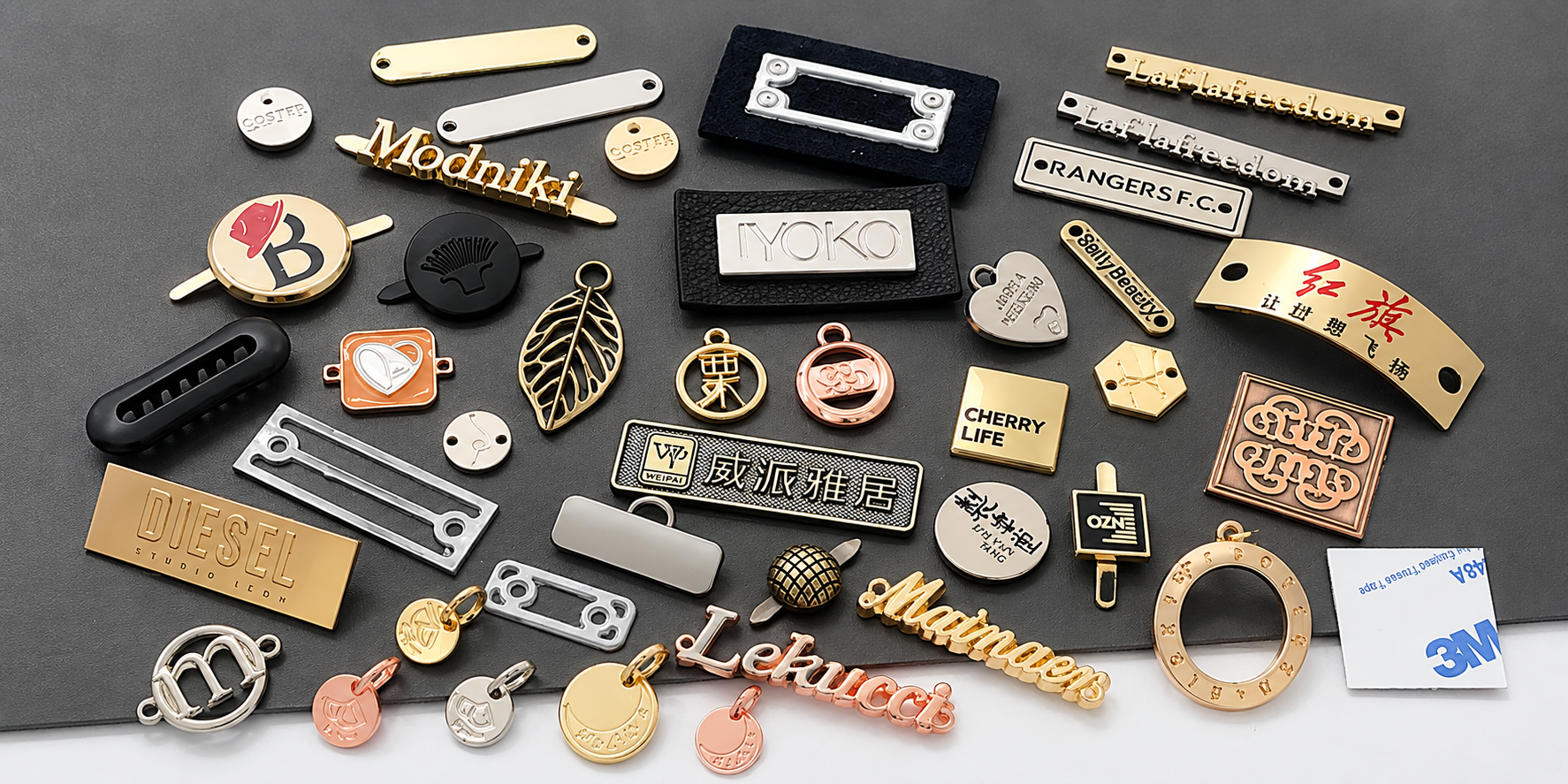
1. Choose the Metal Tag by Mounting Method
For garment designers and factories, the mounting method is often the first technical decision because it determines how the metal plate is actually attached during sewing or final assembly.
Sew-on Metal Tags
Sew-on tags usually have two or four small holes at the ends or around the edge. The sewing operator passes thread through the holes and fixes the label directly to garments, hats, knitwear, or fabric accessories. This structure is simple, easy to inspect, and convenient when the factory wants to avoid extra hardware on the back of the fabric.
Metal Tags with Prongs or Pillars
These tags have two or more bendable metal legs on the back. The prongs pass through the fabric, a backing plate is added inside, and the legs are pressed flat to secure the tag. This setup works well on jeans waistbands, thicker coats, structured fabric, and bags where the material can support a mechanical fixing system.
Rivet or Screw Metal Plates
Rivet- and screw-mounted tags use a post, threaded stem, or matching rivet component. The structure is strong and is often chosen for leather jackets, belts, premium denim, luggage, and higher-end bags. It is particularly useful when the metal tag needs to stay firmly positioned on a thicker panel.
Safety Pin or Butterfly Clutch Tags
This structure is closer to a pin badge. A pin post on the back works with a safety clasp or butterfly clutch, making the decoration removable. It is a useful option for decorative brand badges, seasonal accessories, uniforms, and collections where the customer may want to remove the metal piece.
Metal Hanging Tags
Hanging tags usually use one top hole combined with a cord, chain, or small ring. They can be attached near a neck label, zipper, or accessory point as a removable decorative detail. This format works well when a brand wants a metal identity element without permanently fixing the tag to the garment body.
2. Choose the Metal by Weight, Durability, and Style
The material affects weight, corrosion resistance, surface appearance, production method, and budget. There is no single best metal for every project, so the final choice should match the garment and the intended brand positioning.
Material | Key Characteristics | Typical Applications |
Zinc Alloy | A mainstream option for die-cast shapes; good for complex 3D relief, moderate weight, and cost-effective customization. | Jeans, coats, bags, logo plates, 3D brand emblems |
Stainless Steel | Hard, corrosion-resistant, and suitable for brushed or mirror finishes; a practical choice where frequent washing is expected. | Washable garments, sportswear details, modern labels |
Brass / Copper | Heavier premium feel with strong vintage potential; works naturally with antique brass, antique copper, and aged finishes. | Premium denim, heritage workwear, leather goods |
Aluminum | Very lightweight and suitable for thin or soft fabrics that should not sag under a heavier metal label. | Light garments, shirts, lightweight bags, delicate fabrics |
For lightweight knitwear or soft apparel, weight is often the first constraint. For heavy denim, leather, and structured outerwear, the buyer can prioritize stronger 3D relief, antique finishes, and mechanical mounting because the base material can support a more substantial metal component.
3. Choose How the Logo Appears on the Metal Surface
The logo process controls the first visual impression. The same brand name can feel minimal, vintage, technical, or playful depending on whether the logo is recessed, raised, cut through, or filled with color.
Engraved / Debossed Logo
The logo sits below the metal surface. The recessed area can remain as metal or be filled with paint, such as black lacquer, to make the lettering easier to read. This is a clean option for compact brand plates and understated designs.
Embossed / Raised Logo
The logo projects above the metal surface, creating a tactile and more powerful identity. custom embossed metal tags are especially useful when a brand wants its initials, wordmark, crest, or symbol to remain visible even without printed color.
Cut-out Logo
Letters or graphic lines are opened through the metal body, creating a lighter, more contemporary look. Cut-out designs work especially well when the garment fabric itself becomes part of the visual contrast behind the metal label.
Enamel / Epoxy Detail
Colored enamel-like fill or clear epoxy can be added to the metal surface or recessed areas. This gives the tag more color and can work well for children’s wear, sports-inspired collections, accessories, or brands that rely on a specific color system.
4. Size Matters: From Small Clothing Labels to Large Bag Plates
Customization can range from approximately 10 × 5 × 2 mm small clothing tags to larger bag plates around 100 × 50 × 5 mm. The best size depends on where the label sits, how much visual attention it should attract, and whether the base fabric can comfortably support the weight.
A small tag can work near a hem, cuff, pocket, hat, knitwear edge, or subtle brand position. Larger plates make more sense on handbags, backpacks, leather panels, coat backs, or statement applications where the metal element is meant to be seen from a distance.
During sampling, do not evaluate dimensions on a white table alone. Place the sample on the actual garment or bag panel. A tag that looks balanced by itself can appear too small on a large leather bag or too heavy on a thin knit.
5. Ready-Stock Samples Can Shorten Development Time
WYSECN also keeps selected metal label styles in stock. If an existing size, finish, or structure is close to your requirement, a stock sample can be sent as a physical reference before a fully customized mold or production sample is developed. For buyers searching metal inventory tags as quick reference options, this can reduce early-stage comparison time and help teams confirm weight, finish, and mounting direction faster.
You can browse the current metal label category here: https://www.wysecn.com/metal-labels/
Practical Matching Guide for Common Products
Product | Suggested Material | Mounting | Good Visual Direction |
Premium denim | Zinc alloy / brass | Prongs, rivets, screws | Embossed logo, antique finish |
Leather jacket or bag | Brass / zinc alloy | Screw or rivet | Raised logo, antique or polished metal |
Knitwear / soft apparel | Aluminum / light stainless | Sew-on | Small clean logo plate |
Sports / youth collection | Stainless / zinc alloy | Sew-on or pin | Color enamel or epoxy detail |
Removable brand badge | Zinc alloy / brass | Butterfly clutch | 3D badge or crest |
What to Include in a Metal Tag RFQ
A clear RFQ helps the supplier quote and sample more accurately. Before contacting a metal tags on clothes supplier, prepare as much of the following information as possible:
·Garment or bag type and the exact mounting position.
·Target tag length, width, and thickness.
·Logo file, drawing, or reference image.
·Preferred metal: zinc alloy, stainless steel, brass/copper, or aluminum.
·Logo style: debossed, embossed, cut-out, enamel/epoxy, or mixed process.
·Finish or plating color, including antique, polished, brushed, matte, or custom tone.
·Mounting structure and fabric/material thickness.
·Estimated order quantity and target sampling schedule.
Why Work with WYSECN for Custom Metal Labels?
WYSECN supplies metal labels alongside a broader range of garment accessories and supports OEM and ODM development. That makes it easier for brands and factories to coordinate labels with buttons, zippers, rivets, cord hardware, and other garment components within the same development process.
Whether you need subtle small clothing tags, bold custom embossed metal tags, sew-on plates, riveted leather labels, or ready-stock samples for faster evaluation, the most efficient starting point is a clear application brief and an approved reference for size, finish, and mounting.
Have a Custom Metal Tag Project in Mind?
Have an idea for your next custom project? Whether you already have a clear drawing, a rough sketch, or only an early concept, send us your garment type, tag size, logo artwork, preferred metal, finish, and mounting method. Our team will review your request and get back to you within 24 hours.
Email: sales@wysecn.com
Website: https://www.wysecn.com
WhatsApp: +86 15919919062
You can contact us directly or click the text to submit an inquiry.
If you would like to know more about this product:
DIY Button Styling Tips: Matching Buttons with Clothing for a Professional Look